
Bringing Events, Maps, and Place Together in a Unified Digital Experience

Overview: A Platform for Events, Place, and Possibility
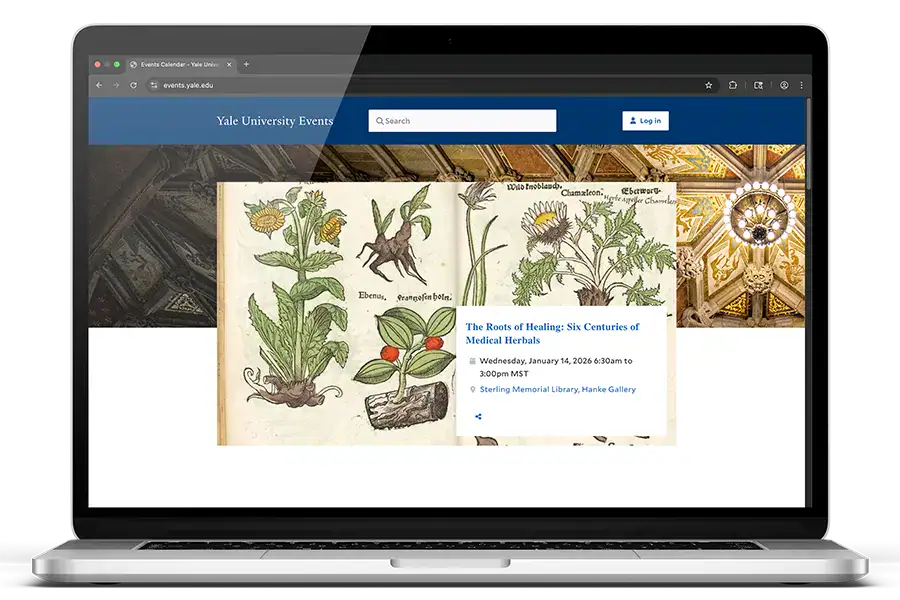
For Yale University, managing events and wayfinding means supporting a vast, ambitious community with a seamless digital experience.
Over the past five years, Yale has partnered with Concept3D to power its campus map and, most recently, its centralized events calendar via Localist. Together, these tools now form a single platform that connects events to place, supports decentralized schools and units, and quietly “just works” at the scale of a world-class institution.
“I don’t know anybody else who is in the space that’s doing quite what Concept3D is doing here… It’s not just an application, but an events and mapping platform.”
Franz Hartl, Associate Director for Digital Experience

The Challenge: Legacy Systems
For years, Yale’s event calendar ran on an open-source application (Beadwork) while the map was a homegrown tool. Each did its job, but they lived in isolation.
The challenges included:
- Siloed tools – The map and calendar didn’t integrate with each other
- Limited integration – No native tie-in to Yale’s Drupal-based YaleSites CMS or broader web infrastructure.
- Underutilized functionality – Many of Yale’s important events were effectively buried with a damaging lack of discoverability.
- Complex campus needs – Different audiences (general public, students, internal communities), different event types (lectures, performances, conferences, recurring series), and a decentralized set of schools and units all needed to coexist on one institution-wide platform.
“Calendaring and events is harder than it seems,” noted Alyssa DeChiaro, Software Engineer. “An academic calendar, your Outlook calendar, and a public event calendar are all very different.”
“We weren’t really thinking about things holistically… It was kind of all stand-alone. We had a basic public calendar, and that’s what it did.”
Franz Hartl, Associate Director for Digital Experience
The Solution: A Unified, Cohesive Events & Mapping Ecosystem
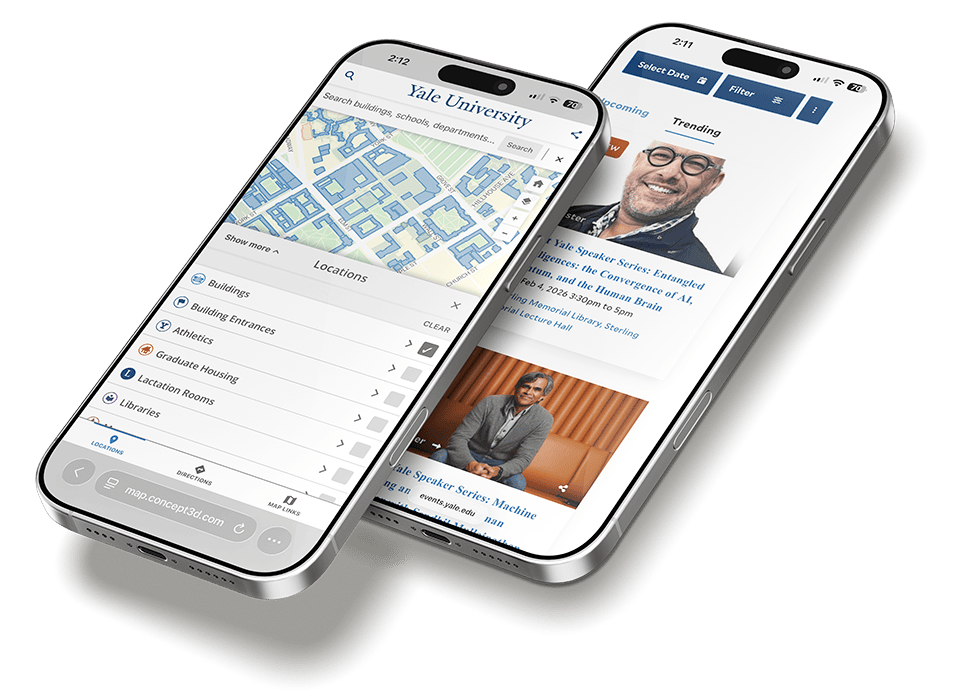
Yale’s partnership with Concept3D began with a foundational need: a modern, centrally supported mapping platform that could replace a homegrown system and serve as the authoritative source for campus location data. The transition to the Concept3D Interactive Campus Map provided exactly that—a robust mapping CMS that became the backbone of Yale’s digital wayfinding ecosystem.
“We realized we needed a CMS for mapping… now the system itself has become the canonical source of information.”
Franz Hartl, Associate Director for Digital Experience
Seamless Integrations
Building on that success, Yale expanded its use of the Concept3D suite by adopting Localist Events to replace its legacy public calendar system. The decision meant unifying events, places, and the broader digital experience under a single, cohesive platform. Through deep integration with YaleSites, both events and map data now surface naturally across the university’s web ecosystem, supported by institutionally aligned branding and a rigorous accessibility framework.
Visually and structurally, the improvement has been dramatic.
“There was a location in our previous system, too, but it didn’t tie in with our other map system… Having it just a bit more cohesive is nice. Visually, it’s very appealing for people and easier to find things,” Alyssa DeChiaro, Software Engineer at Yale University shared.
But the Concept3D Suite’s impact goes far beyond aesthetics. Yale, historically decentralized, required a platform flexible enough to support autonomy while still maintaining a single source of truth.
A Centralized System for Efficiency
With Localist and the Concept3D map working in tandem, Yale can now:
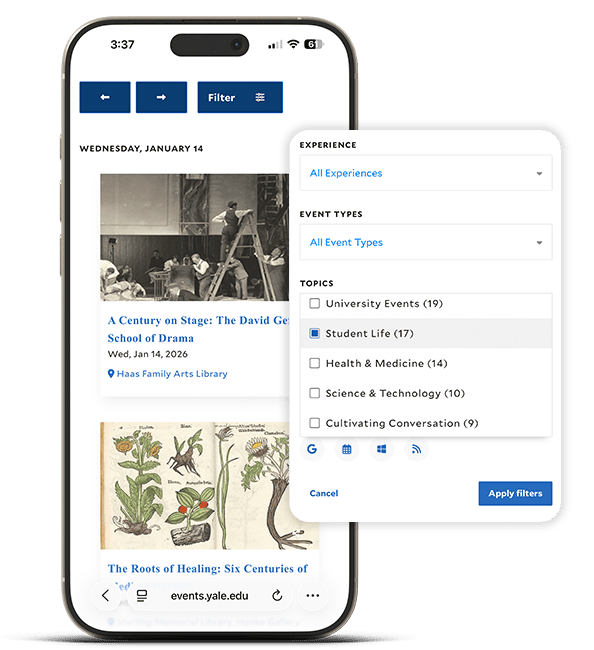
- Provide autonomous calendars for professional and graduate schools, each with its own branding and targeted audiences.
- Consolidate events through keyword-based sync rules, ensuring relevant listings roll up automatically to the main Yale calendar without double entry.
- Accept multiple inbound data feeds (ICS, CSV, and more) so events created in other systems still appear seamlessly in the public calendar.
- Maintain clear editorial workflows, distinguishing technical ownership from communications-led governance and review processes.
“Teams have really enjoyed having their own [calendars] because they put their own branding on there… And with the sync, they don’t have to do double entry or ask for access. They can just tag it and it can go for review or publish,” Alyssa DeChiaro said.
Adoption & Reliability
Adoption has been similarly smooth. Many new users have been able to publish events with little more than a direct link—no training required—speaking to the intuitiveness of the platform.
“They didn’t see any training… they figured it out, no problem. The creation process is just more intuitive,” Alyssa DeChiaro said.
Equally impactful is the system’s reliability. For Hartl, the absence of negative feedback is one of the strongest indicators of success in a place where users are not shy about voicing concerns.
“The high-level impact is that we don’t get complaints… In a critical place, where people will not hesitate to say, ‘You’re doing it wrong,’ we don’t really get that for this.”
Franz Hartl, Associate Director for Digital Experience
Additional Supportive Features
- A cloud-based architecture that minimizes Yale’s maintenance burden.
- An intuitive creation and approval workflow that accelerates event management.
- Ongoing enhancements, from calendaring innovations to accessibility upgrades.
- Exceptional customer support, including highly technical and responsive guidance from Yale’s primary Concept3D partner representative.
Together, the Concept3D Interactive Campus Map and Localist Events have evolved into a unified suite that delivers more than tools—Yale sees it as an interconnected platform for events, place, accessibility, and institutional storytelling.
“Concept3D support is really fast, and they’re very good… It’s been huge for us to have just a really good partner. It feels like a good partnership, and it helps our clients trust us, too.”
Alyssa DeChiaro, Software Engineer

Accessibility and Values Alignment
Accessibility is not optional at Yale; it’s a core requirement and starting point.
“We don’t do anything that’s not accessible. It would have been a non-starter… All our decisions flow from accessibility,” Frank Hartl said.
Concept3D’s commitment to accessibility—both in the map (accessible entrances, pathways, and building information) and in the calendar’s digital compliance – aligned with Yale’s institutional values and technical standards. For Hartl and DeChiaro, that alignment made Concept3D not just a vendor, but a viable long-term partner.
Looking Ahead: Events, Place, and the Future Campus Experience
With the Interactive Map and Localist in place, Yale is now thinking beyond today’s events listings.
Hartl sees exciting possibilities in:
- Room Reservations (with Yale Libraries being an early adopter).
- Location-aware experiences, like showing what’s happening nearby when someone is on campus with a bit of time to spare.
- Physical accessibility guidance, linking events to the exact accessible routes, elevators, and entrances attendees need.
- Rich, contextual event discovery that ties together time, place, audience, and access in one cohesive experience.
For Yale, Concept3D has become more than a pair of tools. It’s an evolving suite that connects events, maps, and people—and quietly supports the everyday life of a campus.
“Once you put all this together… the ability to provide, ‘This event is in this location, here’s how you get to the third floor, here’s what’s going on around me right now’—these are all things that are opening up because we’re on that platform.”
Franz Hartl, Associate Director for Digital Experience







Transform your online experience.
See our technology solutions come together in one seamless experience.