Digital
Accessibility


Jill Bobrick Igl, Head of Product at Concept3D
At Concept3D, digital accessibility is not just a priority—it’s a core value. We believe in creating inclusive, user-friendly experiences that empower everyone, regardless of ability, to access and engage with the information and services we provide.
Our commitment is anchored in ensuring that all Concept3D products meet or exceed WCAG 2.1 AA standards, reflecting our dedication to inclusivity and compliance with evolving accessibility regulations, including the latest updates to Title II.
How We Ensure Accessibility:
- Staff Training: Our team is regularly trained in the latest accessibility best practices to maintain a high level of expertise.
- Rigorous Testing: We conduct comprehensive accessibility audits to identify and address barriers, ensuring usability for all.
- Enhanced Features: We invest in cutting-edge tools and resources to continuously improve our Interactive Maps, 360° Tours, and Localist Events Calendars.
Concept3D is committed to continuously improving the accessibility of our digital solutions. As part of this commitment, we’ve worked with industry-leading accessibility organizations, including UsableNet, Deque, and Level Access, to support accessibility testing, identify opportunities for improvement, and inform remediation efforts.
Insights from these collaborations, combined with our ongoing internal accessibility practices, help guide how we design, develop, and test our products to create more inclusive digital experiences for all users.
With over 10 years of experience in digital accessibility, Concept3D is uniquely equipped to help institutions not only meet legal requirements but also champion a culture of inclusivity. We understand the nuances and evolving standards, giving you assurance that your digital platforms are in capable hands. By partnering with us, you can be confident in providing accessible, engaging digital experiences for your entire community.
“Partnering with somebody like Concept3D that already has the accessibility built in solves a huge problem for us.”
Dave Van Etten, Accessibility Consultant, Idaho State University

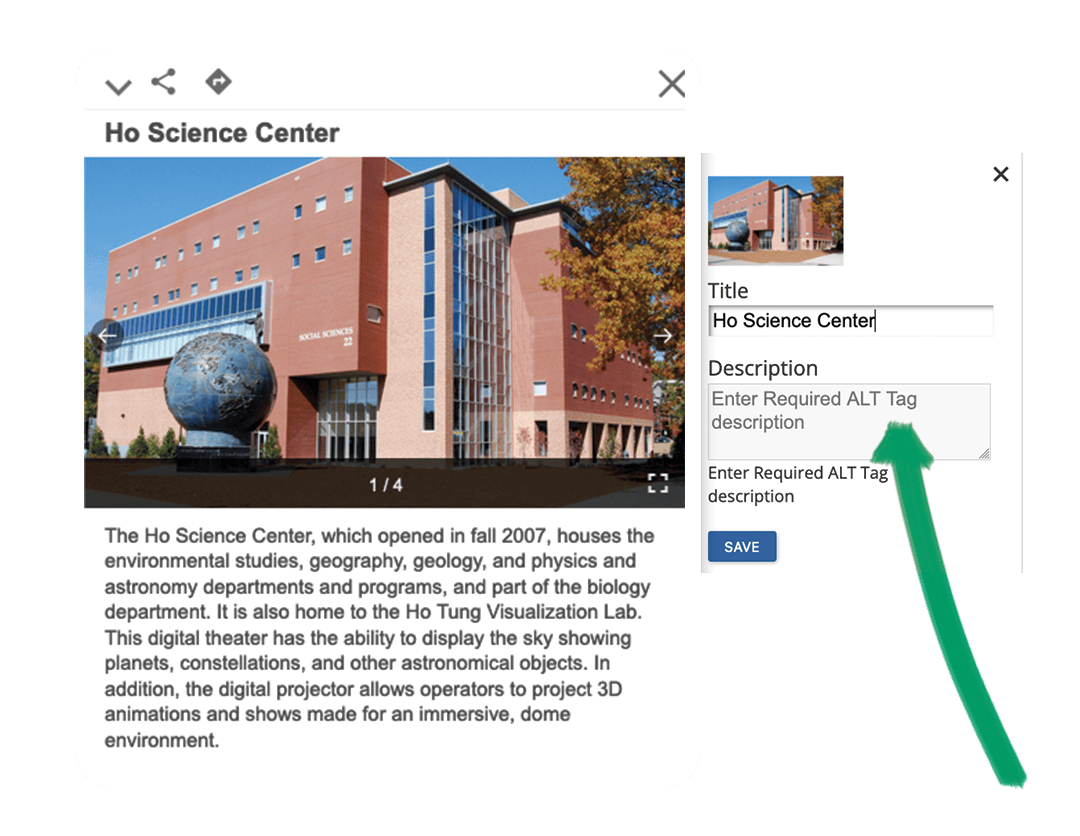
Alt text
Alt text (alternative text) is the description of appearance or function of an image or visual on a web page. Alt text is read aloud by screen readers used by visually impaired users, displays in place of an image if it fails to load and is also indexed by search engines.
Scalable Text
Scalable allows users to increase the text size up to 200% without disrupting the page layout or viewing experience.


Keyboard Navigation
Ensure that functionality is usable with the keyboard. That is, users can access and move between links, buttons, forms, and other controls using the Tab key and other keystrokes. Our solutions do not require a mouse.
Semantic HTML
HTML is the language of the web — it provides the tools to present content and structure of web pages. Accessible web pages utilize semantic HTML, HTML code that tells the person or machine reading the code what each element does.

How accessibile is your current product?
Request Accessibility AuditInternal Resources
See our technology come together in one seamless experience.