
University of Portland Creates a Connected Digital Campus Experience with Concept3D
About University of Portland
Boasted as Oregon’s only comprehensive Catholic university, University of Portland is a private university known for its close-knit community, student-centered approach, and commitment to educating students beyond the curriculum. University of Portland was founded in 1901, evolving from an all-boys preparatory school established in 1891. Today, it is known for its strong engineering and nursing programs, as well as hands-on learning opportunities across all majors that prepare students for success beyond graduation.
Without a doubt, University of Portland is a university that cares about its students. That is why it was important for them to have the digital tools needed to help support their students in finding their community on the campus.
As part of that transformation, the university looked beyond its website itself. The team wanted every digital tool—from campus maps to event calendars and virtual tours—to feel like part of one cohesive experience.
The Challenge
For the last two years, University of Portland has been undertaking one of its most ambitious digital initiatives to date: a complete redesign of its public website.
The goal extended far beyond a visual refresh. The university wanted to create a more cohesive digital experience that reflected its brand, strengthened connections with students, and made it easier for prospective students, families, faculty, staff, alumni, and visitors to engage with campus.
“We’ve essentially started from scratch,” said Katybeth Allen, Director of Digital Marketing and Web. “We’ve been working really hard to not only update the design and visuals, but also to do a massive content overhaul. Digital content is a living, breathing thing.”
As the redesign progressed, the team recognized an opportunity to connect every digital touchpoint. Rather than treating the website, campus map, virtual tour, and events calendar as separate tools, they wanted them to work together as a unified experience with consistent branding, functionality, and accessibility.
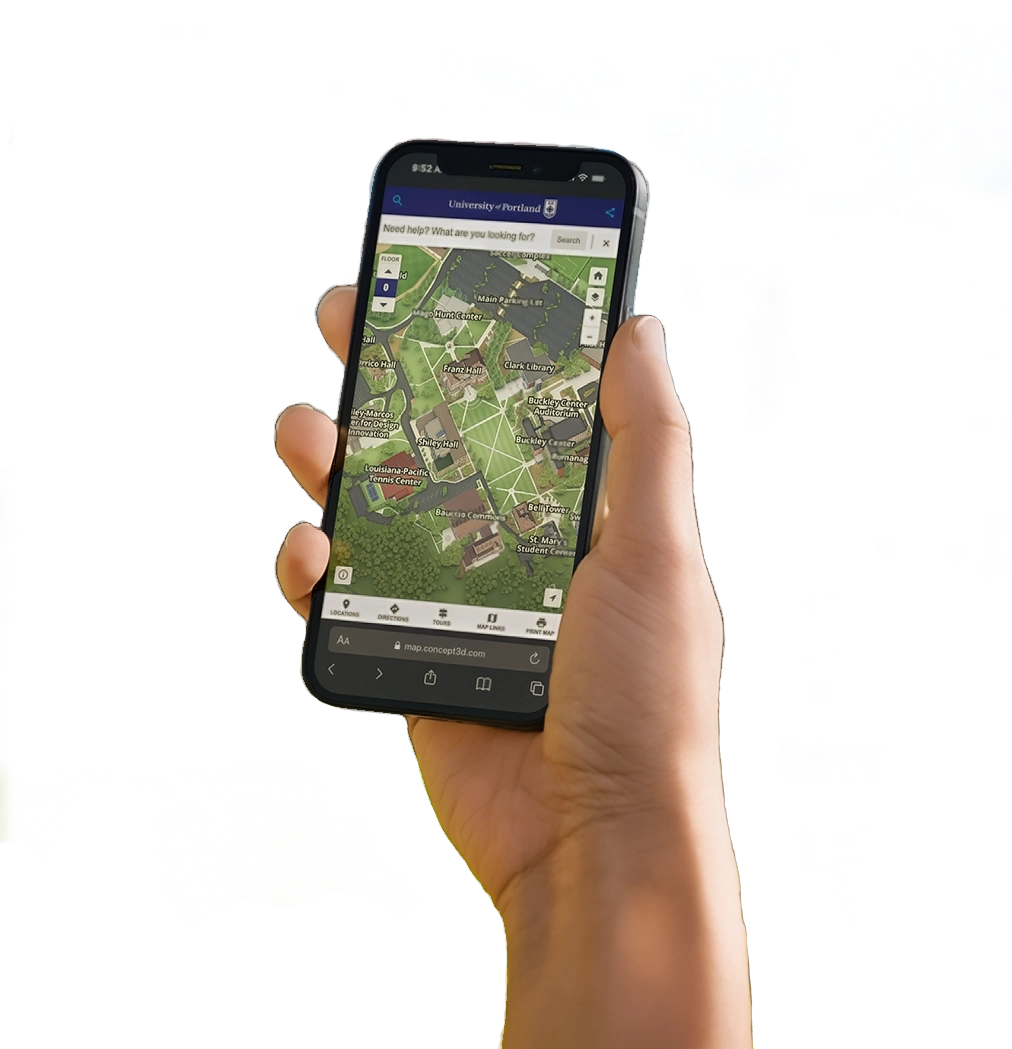
The university had already implemented Concept3D Interactive Maps and Tours but lacked a public-facing events platform that could complement the map and better showcase campus life. Its previous calendar system was effective for room scheduling but wasn’t designed to promote public events.
“It did not have the ability to advertise or share public-facing or community events,” Allen said. “It was something that was sorely needed.”
After seeing how peer institutions paired Localist Events with Concept3D Interactive Maps, the university expanded its digital ecosystem. By bringing together Interactive Maps, Virtual Tours, and Localist Events, University of Portland created a connected, accessible experience that aligned with its redesigned website and made it easier for every audience to discover, explore, and engage with campus.
Choosing a Platform That Works Together
As the team evaluated event calendar solutions, they researched how peer institutions were presenting campus events online. They were particularly impressed by universities already using Localist alongside Concept3D Maps.
Because Interactive Maps were already part of the university’s digital infrastructure, adding Localist felt like a natural extension.
“Having another Concept3D product already in place definitely helped make the choice a little bit easier, knowing that those two were going to be able to work together,” Allen said.
Instead of introducing another disconnected platform, the university saw an opportunity to create one connected digital ecosystem where events, maps, and tours complemented one another, allowing students, prospects, visitors, and other users to move effortlessly from discovering an event to finding its location to discovering other parts of the campus without major overhaul.
Interactive Maps Keep Campus Information Current
The university’s interactive map has become far more than a navigation tool.
As communications increasingly happen through websites, emails, and digital campaigns, having a live campus map that can be updated instantly has become invaluable.
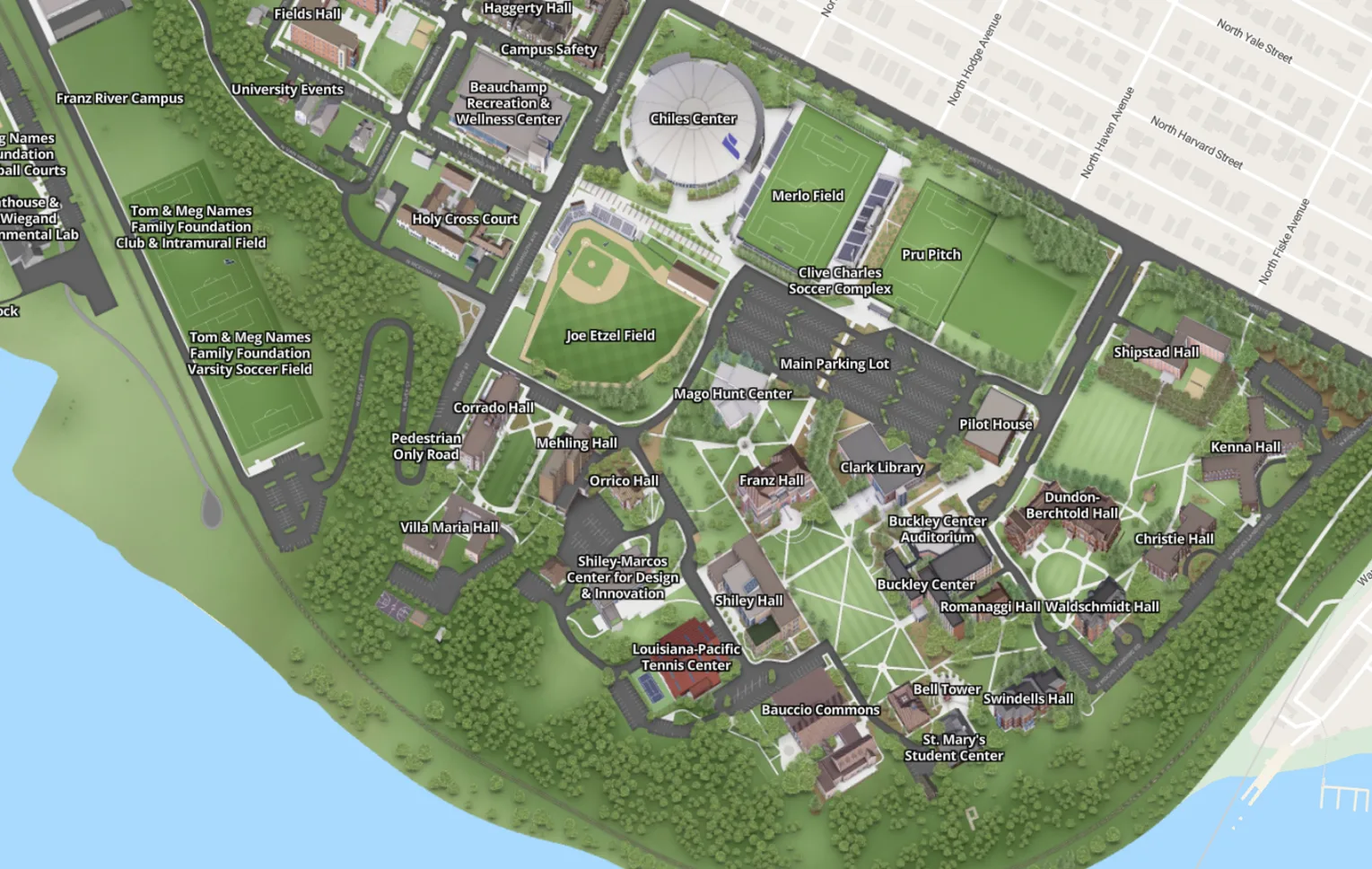
Unlike static maps that become outdated as soon as campus conditions change, the interactive map allows University of Portland to publish updates in real time.
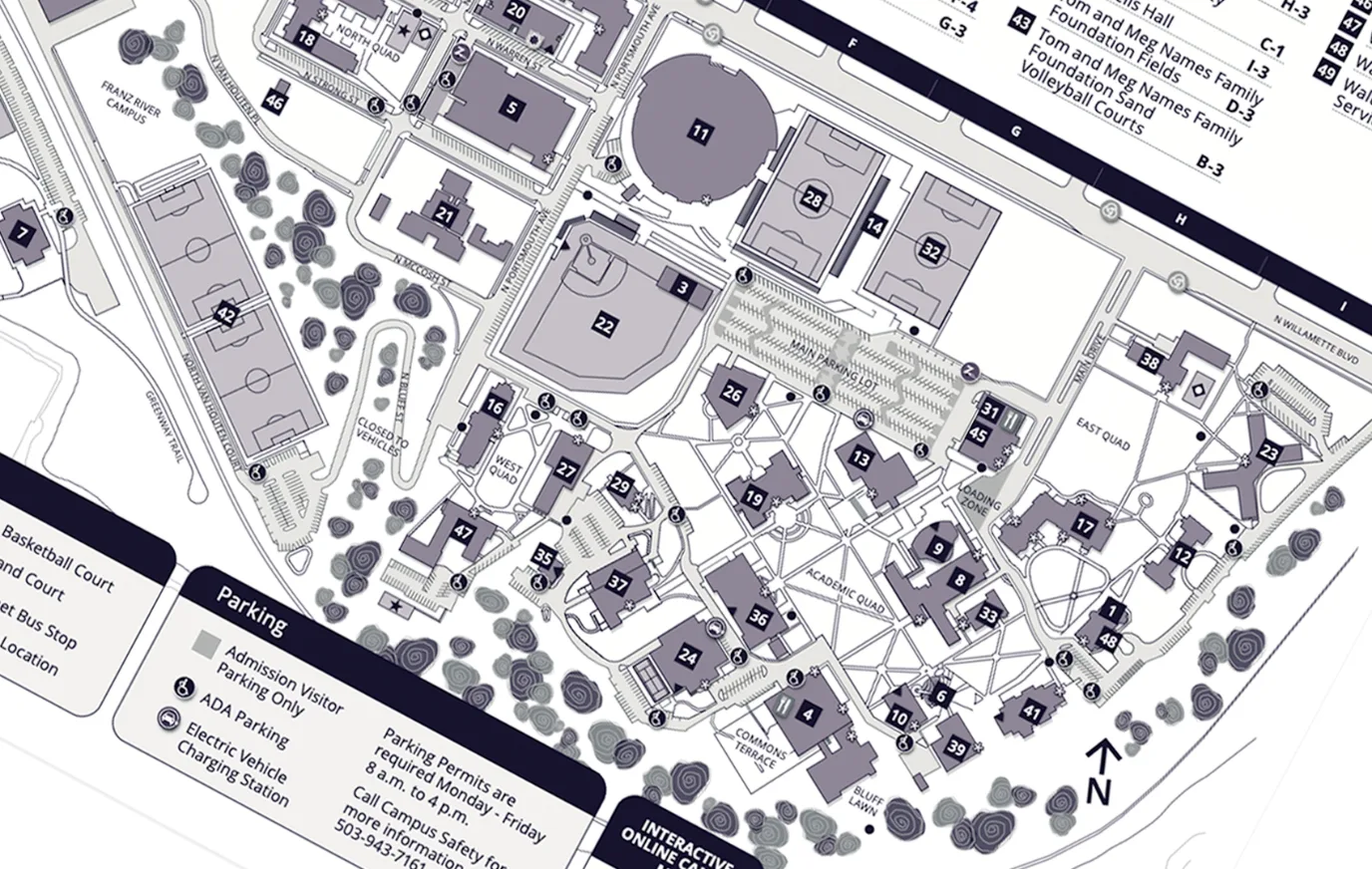
This flexibility has proven especially valuable during large campus events like commencement, where temporary parking areas, entrances, gathering spaces, and event information can all be added as annotations directly to the map.
For prospective students, current students, alumni, and visitors alike, the interactive map provides a current, engaging experience that reflects what’s happening on campus today, not months ago.
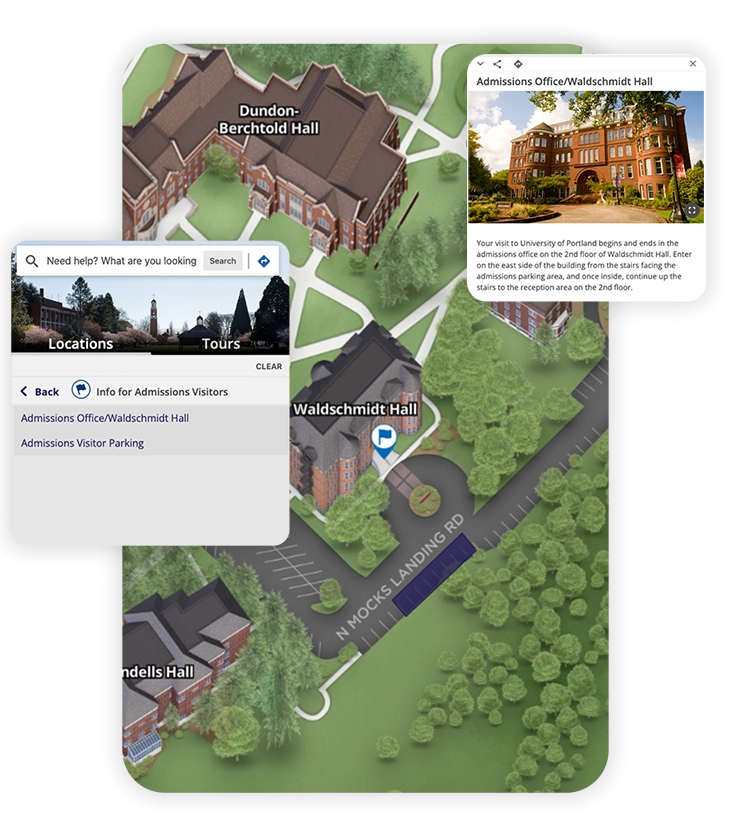
“The ability to share and deploy quickly across multiple channels is critically important. If you print out a map and then things change, you’re stuck.”
Katybeth Allen, Director of Digital Marketing and Web

Virtual Tours Bring Campus to Anyone, Anywhere
For admissions, the university sees virtual tours as much more than a recruitment tool. They are an extension of the campus experience.
Rather than simply viewing photographs or downloading brochures, prospective students can explore campus interactively, discovering academic buildings, residence halls, landmarks, and the history behind them before ever stepping foot on campus.
“It is really critically important to communicate something like being able to take a virtual campus tour in a way that’s engaging, design-forward, and customizable,” Allen said.
The university is continuing to expand these experiences by developing custom tours that go beyond admissions.
Future experiences include tours focused on campus history and university landmarks, as well as a meditation walk inspired by the university’s Holy Cross mission. Visitors will be guided through meaningful locations on campus as they reflect on the university’s mission and values.
“We’d like to create experiences that are a little more experiential and immersive,” Katybeth Allen said.
Beyond recruitment, virtual tours also play an important role in accessibility. Not every prospective student, parent, grandparent, or community member can travel to campus. Whether due to illness, disability, age, or distance, many visitors experience the university remotely. For University of Portland, making campus accessible means meeting people wherever they are.
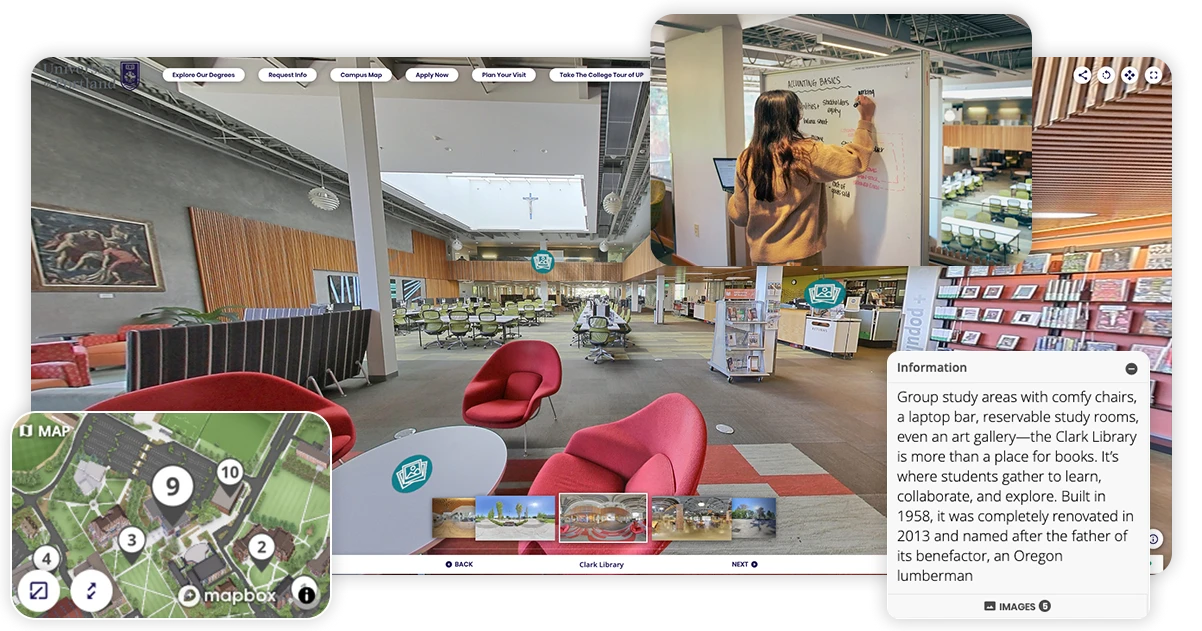
“It presents an accessibility feature that did not otherwise exist previously. If you have someone that cannot travel and you’d like to share the campus tour experience with them, you can do that in a digital format now.”
Katybeth Allen, Director of Digital Marketing and Web
Localist Opens the Door for the Entire Campus Community
While Interactive Maps and Virtual Tours help people experience campus, Localist has transformed how the university shares everything happening on it. Previously, event promotion relied on fragmented processes that made it difficult to publicize campus activities consistently.
Today, any member of the university community can sign in through single sign-on and submit events directly to the calendar.
“The community has responded with overwhelming positivity,” Katybeth Allen mentioned.
Instead of one marketing professional attempting to manage every event across campus, departments can now contribute themselves while maintaining a centralized calendar.
“I’m only one person,” Allen started. “Being able to have some self-service with respect to that is really, really great.”
The result has been greater visibility for campus programming while significantly reducing administrative overhead. Events now automatically populate the university website, making it easier for prospective students, current students, faculty, staff, alumni, and community members to discover what’s happening across campus.
Accessibility Was Central to the University's Digital Transformation
At University of Portland, accessibility is not a checklist item that must be done. It became one of the driving principles behind the university’s website redesign.
Katybeth Allen emphasized that accessibility extends beyond helping visitors navigate campus. It also means giving content editors the tools they need to create accessible digital experiences from the start.
Whether someone is unable to travel because of illness, age, disability, or other circumstances, a digital tour provides an opportunity to explore campus that otherwise might not exist.
“If you have someone who cannot travel and you’d like to share the campus tour experience with them, you can do that in a digital format now, which I think is really wonderful,” Katybeth Allen said.
That commitment aligned closely with the university’s broader effort to modernize every aspect of its public-facing digital presence while ensuring compliance with evolving accessibility standards.
“Having integrated features that allow for the inclusion of digital accessibility features is really valuable. Making it easy for people to ensure they’re adhering to accessibility guidelines when they upload information, tour information, or images is really important.”
Katybeth Allen, Director of Digital Marketing and Web
Three Products Working Together
Perhaps the best example of the University’s connected digital experience is its annual conference exploring artificial intelligence and Catholic higher education.
The event attracts speakers from across the country, including journalists, researchers, and higher education leaders.
Using Concept3D, the university can promote the conference months in advance through Localist, provide a branded landing page, sell tickets, highlight featured speakers, display the event prominently on the university homepage, and guide attendees to the correct campus locations using Interactive Maps.
Rather than directing visitors across multiple disconnected systems, everything is presented as a single experience.
“It created a much more cohesive and polished presence for the conference,” Allen said.
The conference illustrates the university’s larger vision: every digital touchpoint should feel connected, consistent, and unmistakably University of Portland.
“I would not hesitate to recommend [Concept3D]. It’s streamlined our management experience here and allowed for a communal use that didn’t exist before.”
Katybeth Allen, Director of Digital Marketing and Web
One Brand, One Experience
Throughout the website redesign, maintaining a consistent visual identity remained a top priority.
The university customized Localist to mirror the look and feel of its redesigned website, creating a seamless experience as users move between webpages, events, and campus resources.
“We want our digital spaces to feel consistent and coherent,” Allen said. “Being able to mirror the visual experience with the website to the calendar was great.”
Concept3D’s onboarding team worked closely with the university throughout implementation, helping ensure the new tools aligned with both the university’s brand standards and long-term digital strategy.
Looking Ahead
As University of Portland continues to expand its digital ecosystem, the team plans to create more custom virtual tours, encourage greater campus participation in Localist, and continue building experiences that reflect the university’s mission and values.
Allen believes the platform’s greatest strength isn’t any single product, it’s how they work together.
“Having everything under one umbrella definitely ups the ease of use,” she said. “Being able to integrate the map into the calendar, the calendar into the map, and build custom experiences within both is critically important. I would not hesitate to recommend Concept3D.”
Transform your online experience.
See our technology solutions come together in one seamless experience.