
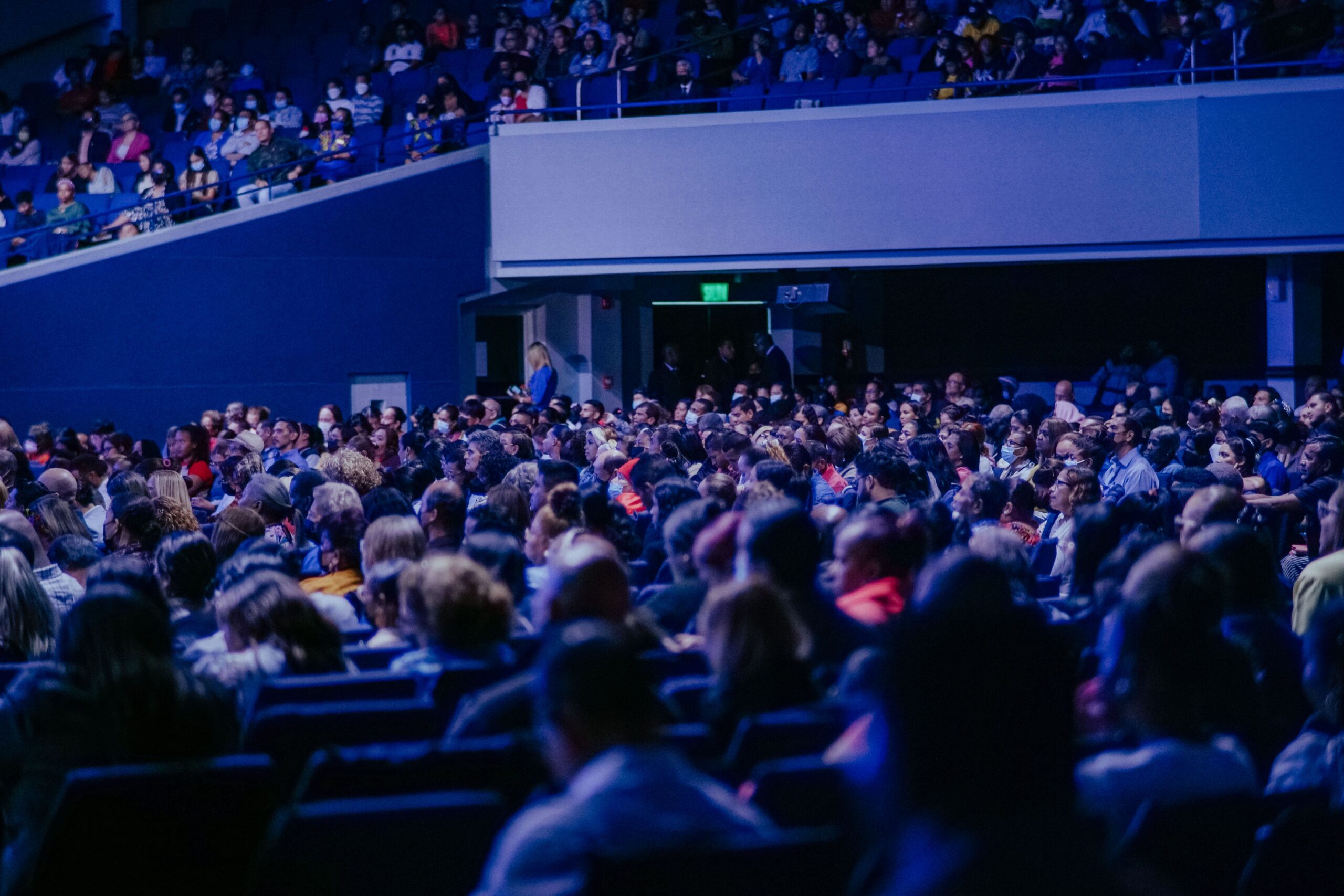
In 2026, attendees aren’t deciding whether to register, stay, or return solely because of the keynote lineup or the size of the exhibit hall. They’re making those decisions based on their experience from start to finish.
Could they easily find their session? Was the accessibility information accurate and easy to access? Did navigating the venue feel intuitive? Did the space feel designed around attendee needs—or simply optimized to fit as many people as possible?
These moments shape perception, satisfaction, and loyalty far more than event programming alone.
The gap between venues that recognize this shift and those that don’t is growing rapidly. Today’s attendees expect seamless, personalized, and accessible experiences at every touchpoint. The venues that can deliver them are setting a new standard—and gaining a competitive advantage in the process.
Here’s what attendees expect in 2026, and what it takes operationally to meet those expectations.
Frictionless Arrival and Navigation
The first ten minutes inside a convention center set the tone for everything that follows. An attendee who spends those minutes confused with the wrong entrance, wrong hall, and no idea where registration is, is already frustrated before the event starts. That frustration shows up in post-event surveys, social posts, and conversations with the person they attended with about whether the trip was worth it.
The fix isn’t more printed maps. It’s replacing static information with systems that update in real time. App download rates at events hover around 30–40%, which means app-only wayfinding is invisible to the majority of your crowd. The better model solution is something more modern, such as QR codes on physical signage that lead to an interactive map with turn-by-turn directions to any room, booth, or amenity in the facility.
Accessibility Information That’s Actually Usable
Most convention centers have accessibility accommodations, but many do a poor job of communicating them. The gap between what exists and what attendees can find is where registrations are lost.
With 1 in 4 U.S. adults living with a disability, this isn’t a niche concern. Attendees with disabilities and the event planners booking on their behalf are making attendance decisions based on pre-visit research. If your accessibility information is a PDF last updated in 2022 buried in a footer link, you’ve already lost some of them.
The core problem is that accessibility data is usually owned by multiple departments. Elevator status lives in facilities. Accessible parking is available for operations. ASL interpreter availability is the responsibility of the event team. Without a centralized system surfacing all of it in one place, guests carry the burden of tracking it down — and many won’t bother.
Interactive maps solve this when built and maintained properly. Accessibility layers — wheelchair routes, elevator locations, accessible restrooms — should be treated as permanent data, not event-by-event additions. Build them once, keep them current, and surface them consistently across your map, event calendar, and pre-visit communications.
DOJ enforcement around digital accessibility is accelerating — the bar is rising not just for physical accommodations, but for the digital tools attendees use to access information about them. For a deeper look at building an inclusive guest experience from the ground up, this piece on inclusive design for venues covers the full framework.
Pre-Event Communication That Reduces Day-Of Friction
Long registration lines and overwhelmed staff at check-in are almost always symptoms of the same root cause: attendees arriving without the information they needed. They don’t know which entrance to use. They’re not sure where to park. They missed the room change notification.
Fast, tech-enabled check-in is now a baseline expectation — but the infrastructure that makes it possible starts well before the doors open. Convention centers that communicate proactively through confirmation emails, event calendar listings, and mobile-accessible maps see shorter queues and far fewer staff hours lost to directional questions.
At minimum, every attendee should have access to this before they arrive:
- The specific entrance for their event (not just “South Hall”)
- Accessible parking locations and drop-off points
- Check-in location with estimated wait times where possible
- Session room assignments linked directly to an interactive map
- Accommodation details — ASL interpretation, quiet rooms, dietary options
A useful diagnostic: pull the five questions your staff fields most often at registration. Each one is a gap you can close in the confirmation email.
Personalization Through Better Discovery
Personalization is no longer a competitive advantage — it’s a baseline expectation. But delivering it at the convention center level doesn’t require AI profiles or behavioral tracking. It means one thing: stop making attendees hunt for what’s relevant to them.
An attendee at a gaming convention center and an attendee at a tech expo in the same building have completely different needs. A centralized event calendar with strong filtering — by topic, session format, audience, and accessibility features — lets each person find what matters without wading through everything else. That’s an experience that feels personal, even when it’s just good information design.
Concept3D’s Events Calendar gives venues a single, filterable, always-current source of truth for event discovery — built for attendees, exhibitors, and planners alike.
Sustainability That Holds Up to Scrutiny
More than 57% of live event attendees consider environmental sustainability a factor in their decision to attend — and that number skews significantly higher among Millennials and Gen Z, who now represent the majority of professional conference attendees. They notice the single-use plastic. They notice the lack of recycling bins, and they post about it.
The venues gaining credibility here aren’t the ones with the best sustainability copy — they’re the ones that have moved to paperless operations and can show actual data. Convention centers already report the highest water use per attendee of any venue type, which means claims require verification. Going paperless — digital schedules, QR-based wayfinding, electronic signage instead of banner stands — is the most visible and immediate win.
Hybrid Access That Feels Like a First-Class Option
Hybrid isn’t a backup plan. For attendees with travel constraints, budget limitations, or accessibility needs, it’s often the preferred option. In 2026, the expectation isn’t just that a remote option exists — it’s that the remote experience is as polished as being in the room.
That requires real infrastructure: bandwidth that handles simultaneous streaming across multiple sessions, AV designed for broadcast from day one, and event listings that clearly flag which sessions are hybrid-accessible before attendees lock in their schedule.
The friction most venues introduce is subtle: the hybrid link is hard to find, the stream buffers, the remote Q&A is ignored. Each of those is a solvable problem, but only if it’s addressed before the event, not improvised during it.
The Finish Line
Every expectation on this list comes back to the same thing: information that’s accurate, findable, and formatted for how people actually behave when they’re standing in a 600,000 sq ft building with a packed schedule and a dying phone battery.
The venues winning in 2026 aren’t necessarily the newest or the largest. They’re the ones that have invested in the systems — interactive maps, event calendars, virtual tours — that get the right information to the right person at the right moment. That’s what turns a first-time attendee into a repeat one.
See how Concept3D helps convention centers deliver on these expectations. Get in touch.