
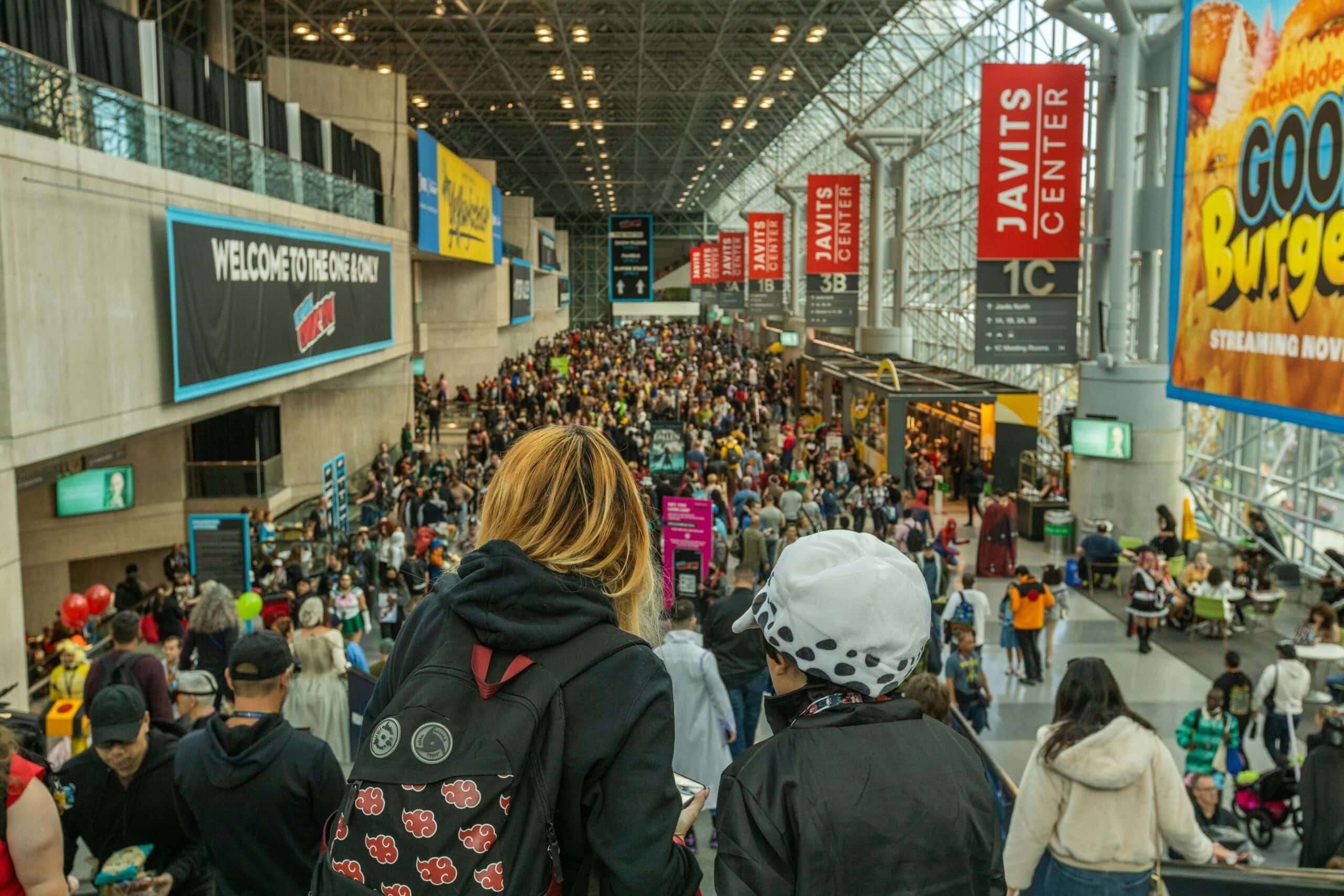
Fans don’t experience an event as a whole — they experience a sequence of moments. How each one feels determines whether they leave satisfied, indifferent, or frustrated. Getting these moments right isn’t about grand gestures; it’s about removing friction at the points where it most naturally accumulates.
The first moment happens before arrival when they ask, “How do I get there?”
Transportation and navigation are often the first real touchpoint fans have after buying a ticket. Outdated parking information, unclear entry points, no sense of what to expect are small failures that carry an outsized emotional weight. Research from the International Association of Convention Centers indicates that 67% of event attendees experience difficulty navigating large convention facilities, with 39% missing key sessions or exhibitions due to wayfinding challenges during peak event periods. Anxiety that starts at home tends to follow people through the gate.
A clear, accurate, and accessible pre-arrival guide — whether digital or integrated into an event app — doesn’t just help people find their way. It sets an expectation that the organizer is on top of things.
The second moment is the entry – “Where do I go first?”
Arriving should feel like the beginning of something. Instead, gate confusion, backed-up traffic, contradictory signage, overwhelmed staff fielding the same questions hundreds of times turns one of the most emotionally charged parts of the day into a stress test. The problem usually isn’t a lack of resources. It’s a lack of consistency. When mobile, web, and printed wayfinding all say the same thing, fans stop asking and start moving. Entry sets the emotional tone for everything that follows.
The third moment is exploration – “What can I do here?”
At a single Aramco United States Grand Prix race day, Concept3D’s mapping platform handled over 50,000 searches for food, water, and beverages — and another 30,000 for entrances and parking. That’s the scale of navigational demand a paper map simply cannot absorb. When fans can’t locate concessions, merchandise, or activations, they disengage. They stop spending. Well-marked exhibitor and amenity areas receive 45% more visitor traffic than poorly marked ones, and events with clear wayfinding see a 25% increase in overall attendee satisfaction. Good navigation in this phase isn’t just a convenience — it’s what connects fans to the parts of an event that make it worth attending.
The fourth moment is the event itself – “Can I navigate in real time?”
A closed entrance, a sold-out stand, an unannounced section change. Small operational hiccups hit harder at live events because fans are already emotionally heightened. A wrong turn can pull someone out of the experience entirely. Static maps become liabilities the moment conditions shift on the ground. The ability to push real-time updates across all touchpoints so a fan’s phone, the web, and the nearest screen all reflect the same current reality is what keeps people immersed rather than problem-solving.
The fifth moment is leaving, begging the question of, “Will I come back?”
A difficult exit lingers. Fans who can’t find their car, can’t navigate the crowd, or can’t remember where they parked carry that frustration with them. It colors their overall memory of the event, and it affects whether they come back. But the exit is also where data begins to do its quiet work. Navigation logs from the event — what fans searched for, where they got stuck, which areas drew the most traffic — give organizers a clear picture of what to improve. That feedback loop between this event and the next helps organizers continuously improve the fan experience.
The hidden ROI of getting these moments right
The venues getting this right aren’t doing so because they’ve invested in better signage or more staff. They’ve done the harder work of mapping the fan journey from first search to last step in the parking lot, and they’ve used navigation and wayfinding as the connective tissue across all of it. The result is lower operational strain, higher dwell time, and fans who feel like the event was designed with them in mind — because it was.